Water has a high specific
heat capacity because a large amount of thermal energy needs to be absorbed in
order to break the hydrogen bonds among water molecules before the individual
water molecules can begin to move about more freely and therefore, causing an
increase in temperature. A high specific heat capacity allows water to
stabilize the internal temperature of organisms and environments such as large
bodies of water like oceans and ponds.
Explain why water has a high specific heat capacity
Water has a high specific
heat capacity because a large amount of thermal energy needs to be absorbed in
order to break the hydrogen bonds among water molecules before the individual
water molecules can begin to move about more freely and therefore, causing an
increase in temperature.
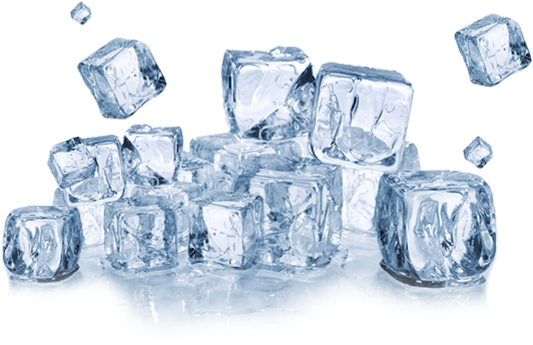
Explain why ice floats
At O˚C, water molecules
become locked into a crystalline lattice structure; each water molecule bonded
to four other molecules through hydrogen bonding. This is the solid state of
water called ice. The hydrogen bonds keep the water molecules far apart enough
to give ice a density of about 10% less than that of liquid water. The crystalline
structure provides a larger volume for the same amount of liquid water molecules.
Therefore, ice is less dense compared to liquid water and ice floats on liquid
water.