- The largest use of hydrogen in the world is in ammonia manufacture.
- The major application of hydrogen is in the catalytic hydrogenation of organic compounds. Unsaturated vegetable and animal oils and fats are hydrogenated to make margarine and vegetable shortening.
- Hydrogen is used to reduce aldehydes, fatty acids, and esters to the corresponding alcohols.
- Hydrogen is important because it is involved in the process of enzyme catalysis and because it stabilizes things like nucleic acids and proteins.
- Hydrogen is important because it offers Earth another fuel source and may free the Earth from using fossil fuels someday.
- It is currently used as a gas and liquid for many different industries and is often used to provide electricity in the fuel cells of automobiles or in internal combustion engines. For example, NASA used hydrogen to power the space shuttles.
- Hydrogen has been used as a primary rocket fuel for combustion with oxygen or fluorine and is favoured as a propellant for nuclear-powered rockets and space vehicles.
- Liquid hydrogen is used in the laboratory to produce low temperatures.
- Hydrogen is important because it offers Earth another fuel source and may free the Earth from using fossil fuels someday.
What are the important of hydrogen in life?
Explain why water has a high specific heat capacity

Water has a high specific
heat capacity because a large amount of thermal energy needs to be absorbed in
order to break the hydrogen bonds among water molecules before the individual
water molecules can begin to move about more freely and therefore, causing an
increase in temperature.
Explain why ice floats
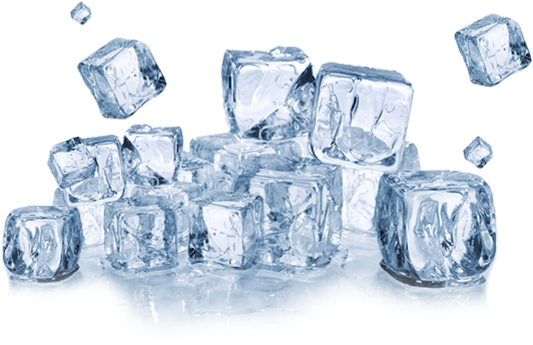
At O˚C, water molecules
become locked into a crystalline lattice structure; each water molecule bonded
to four other molecules through hydrogen bonding. This is the solid state of
water called ice. The hydrogen bonds keep the water molecules far apart enough
to give ice a density of about 10% less than that of liquid water. The crystalline
structure provides a larger volume for the same amount of liquid water molecules.
Therefore, ice is less dense compared to liquid water and ice floats on liquid
water.